
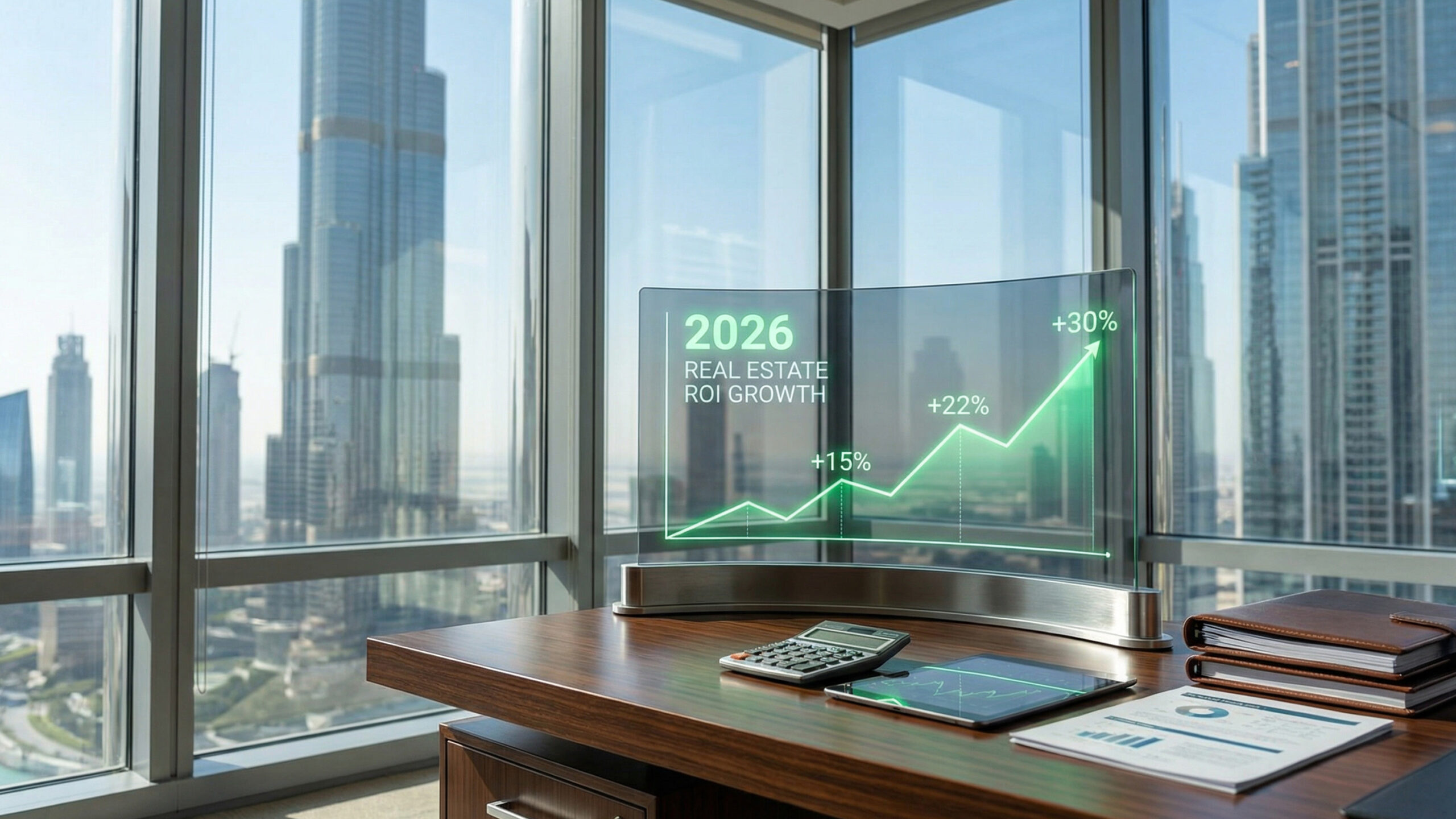
Dubai’s real estate market in 2026 is entering a defining phase, one driven by performance, global demand, and strategic growth rather than hype alone.
After years of record-breaking transactions and rapid price appreciation, the market is evolving into a more structured and investment-focused ecosystem. Mega infrastructure projects, rising population, and strong international capital inflows continue to strengthen Dubai’s position as a global property hotspot.
At the same time, developers are becoming more calculated with launches, regulations are more transparent, and investors are diversifying across luxury, mid-market, and off-plan opportunities.
So, what does this shift mean for buyers and investors?
This article explores Dubai’s current real estate landscape, key market values, and the trends expected to shape its next phase of growth.
Dubai Housing Market Overview 2026: Key Trends and Insights
Dubai’s housing market continues to show strong momentum, building on a record-breaking performance in 2025. The sector remains one of the most active real estate destinations globally, driven by sustained demand, investor confidence, and population growth.
- Record residential activity: Dubai recorded over 200,000 property transactions in 2025, marking one of the strongest years in its real estate history.
- Stable price growth: Property values are moderating in 2026 but remain around 15% higher year-on-year, indicating healthy, demand-led appreciation rather than market cooling.
- New supply pipeline: Developers announced more than 150,000 residential units in 2025, while actual handovers stayed below projections, reducing short-term oversupply pressure.
- Rise in end-user demand: Since 2021, the market has shifted toward genuine homebuyers, lowering dependence on speculative investments.
- Villa and townhouse demand: Low-density housing, including villas and townhouses, continues to outperform apartments due to lifestyle preferences and limited availability.
- Strong rental market: Increasing population and steady migration are keeping rental demand high across key communities.
- UAE investment appeal: Tax advantages, global connectivity, and long-term economic stability continue to position Dubai and the wider UAE as top real estate investment hubs
Dubai Real Estate Supply Pipeline & Residential Delivery Outlook (2026–2030)
Dubai’s property market in 2026 is balancing rising supply with sustained demand. While new project launches remain strong, phased handovers and construction delays are helping prevent sudden oversupply.
Current Housing Stock & 2026 Delivery Forecast
- Total residential stock (end-2025): ~935,000 units
- Units delivered in 2025: ~46,700 homes
- Expected completions in 2026: ~55,000 units
- Projected handovers in 2027: ~75,000 units (peak pipeline phase)
- Long-term pipeline (2026–2030): 400,000+ units under planning or construction
Historically, 30–40% of announced units have been delayed due to contractor capacity and supply chain constraints. This staggered delivery cycle reduces the risk of market oversupply and supports price stability.
Population Growth Driving Housing Demand in Dubai
Dubai’s rapid population growth remains the primary driver of property demand in 2026.
- 208,000+ new residents added in the past year
- Annual population growth of 5.2%
- Strong demand estimated at ~50,000 housing units per year
Key demand drivers include remote workers, corporate relocations, entrepreneurs, and long-term residency initiatives such as the Golden Visa program. Analysts estimate the 2026 pipeline represents roughly 2–3 years of supply, supported by strong absorption rates.
Comparing Apartment and Villa Supply Performance Trends
Dubai’s existing housing composition remains heavily apartment-focused:
- 80% apartments
- 20% villas and townhouses
However, the upcoming supply will be approximately 86% apartments, widening the supply gap in low-density housing.
Market Impact:
- Villas and townhouses continue to outperform, driven by limited supply and strong family demand.
- High-net-worth individuals and expats are driving sustained demand for spacious homes.
- Supply constraints in villa communities are contributing to faster price growth compared to apartments.
Overall, Dubai’s 2026 real estate outlook reflects a supply expansion aligned with long-term population growth, reinforcing market resilience rather than signaling oversaturation.
Where to Invest in Dubai in 2026?
Dubai’s real estate market in 2026 offers opportunities for every budget and investment strategy. The key is aligning your property investment with your financial goals, whether that’s short-term rental income, off-plan appreciation, or long-term capital growth.
Best Areas for Off-Plan Investment
Off-plan properties remain popular due to flexible payment plans and strong appreciation potential. Investors should consider high-demand communities such as Yas Island, Saadiyat Island, Al Reem Island, and Dubai Hills Estate. These areas are backed by reputable developers and show consistent buyer demand.
Best Areas for Short-Term Rental Income
For high rental yields and Airbnb-style returns, focus on tourism-driven locations like Dubai Marina, Downtown Dubai, and Palm Jumeirah. These waterfront districts maintain strong occupancy rates year-round.
Long-Term Capital Growth Strategy
Investors seeking appreciation should prioritize sustainable, walkable communities with energy-efficient and eco-friendly features. A mixed-portfolio approach can further strengthen long-term returns in Dubai’s evolving property market.
Dubai Commercial Real Estate Market 2026:
Dubai’s commercial real estate market started 2026 with impressive growth, reflecting strong investor confidence across office, retail, land, and hospitality assets.
In January 2026, Dubai recorded 1,446 commercial property transactions, compared to 917 transactions in January 2025, a significant year-on-year increase. Total sales value reached approximately AED 17.06 billion, nearly doubling from AED 9.34 billion in January 2025. The market also saw month-on-month growth from December 2025, which generated AED 15.90 billion across 1,262 transactions.
Commercial Property Performance, January 2026
- Land: AED 10.82B (63.45%) Leading segment by value
- Office Properties: AED 3.27B (19.19%) Strong demand for premium office space
- Whole Buildings: AED 1.18B (6.92%)
- Retail Units: AED 673.4M (3.95%)
- Hotel Apartments: AED 660M (3.87%)
- Other Commercial Assets: AED 447.2M (2.62%)
Land transactions dominated the market, while office sales highlighted rising demand driven by business expansion and corporate relocations. Overall, Dubai’s commercial property sector in 2026 demonstrates sustained growth and strong investment momentum.
Final Thoughts
Dubai’s real estate market in 2026 shows steady evolution, supported by record-breaking transaction values and strong off-plan property sales. Off-plan developments continue to dominate buyer activity, reflecting investor confidence and flexible payment plans offered by developers.
Ongoing population growth is accelerating property absorption, reducing the risk of oversupply, and strengthening overall market stability. This demand-driven growth remains a key factor behind Dubai’s resilient property sector.
However, with expanding project delivery pipelines and occasional construction delays, overall price growth is gradually moderating. While apartments account for the majority of new supply, luxury properties and villas are outperforming the broader market. High-end homes continue to see stronger price appreciation and faster transaction volumes compared to mid-market units.
Overall, Dubai’s property market in 2026 remains balanced, investment-friendly, and particularly attractive for buyers targeting premium and luxury real estate segments.
FAQs:
1. Are property prices expected to rise in Dubai in 2026?
Prices are moderating but remain stable with steady growth driven by end-user demand and limited supply in key segments.
2. Which property types offer the best ROI in Dubai?
Villas, townhouses, and well-located off-plan projects are currently delivering strong rental yields and capital appreciation.
3. What is driving demand in Dubai’s housing market?
Population growth, foreign investment, residency programs, and Dubai’s tax-friendly environment are key demand drivers.4. Which property segment is performing best in 2026?
Luxury villas and high-end properties are outperforming apartments in terms of price appreciation and transaction speed.