
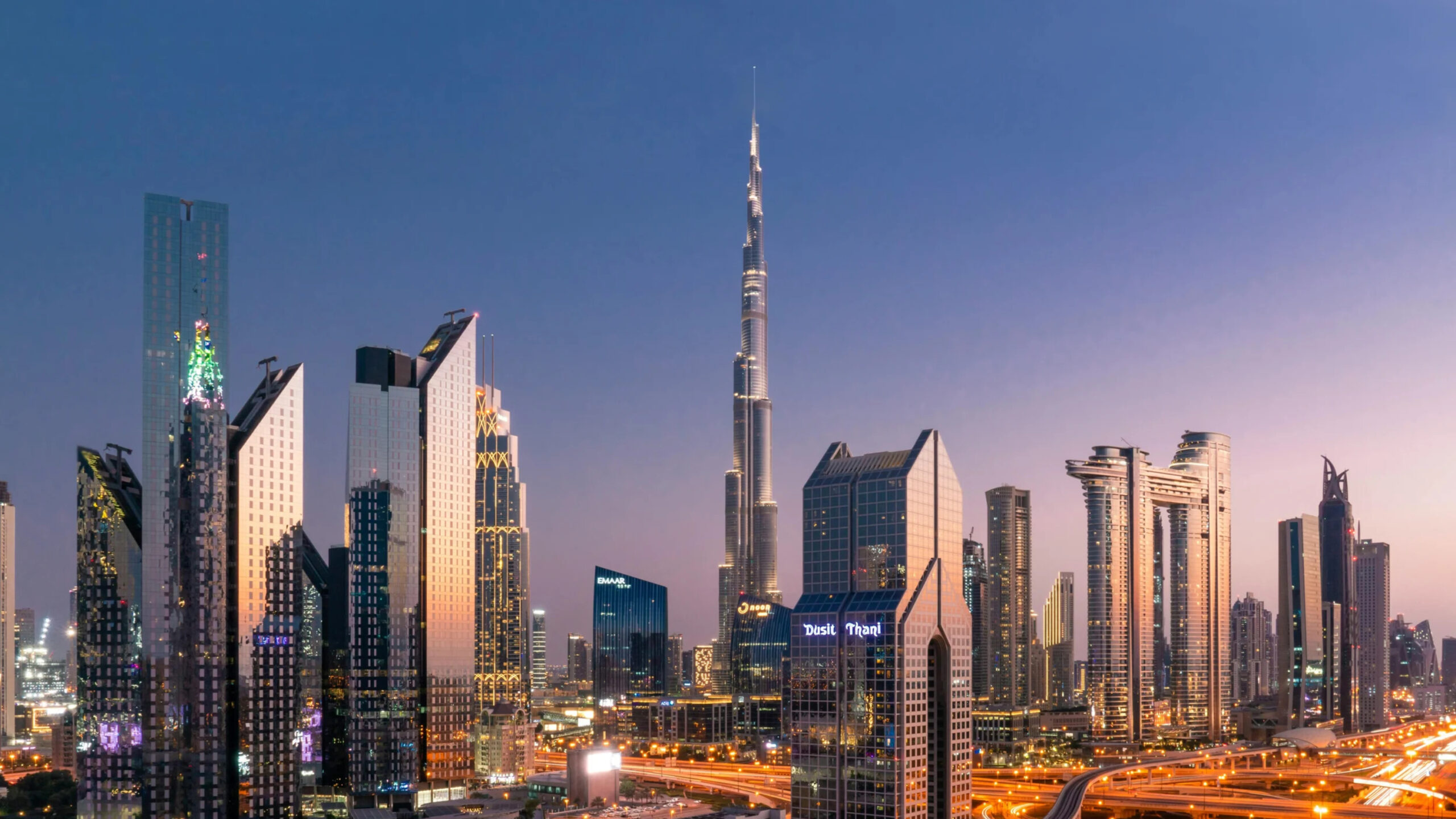
As 2026 begins, the Dubai housing market is attracting growing global attention after several years of rapid expansion. In 2025, Dubai recorded an impressive 202,349 residential sales transactions, marking a 464% increase compared to 2021. This remarkable growth has positioned Dubai as one of the world’s most active real estate markets, drawing investors, homeowners, and international buyers looking for strong returns and long-term opportunities.
However, such rapid growth has also sparked discussions about market sustainability, price stability, and the possibility of a future correction. In response to rising demand, developers launched over 150,000 new residential units in 2025, significantly increasing housing supply and shifting the focus toward how the market will balance supply with demand in the coming years.
In this analysis, we explore the latest Dubai real estate trends for 2026, including housing supply vs. demand, property price movements across key segments, rental yield performance, and what the UAE property market could look like over the next 12 to 36 months.
How has the Dubai Housing Market performed over the Last Decade?
Over the past decade, the Dubai real estate market has experienced a complete cycle of expansion, correction, and structural transformation. After the slowdown that followed the post-2014 property peak and the disruption caused by the 2020 pandemic, the market gradually entered a new recovery phase supported by regulatory reforms, improved transparency, and renewed global demand.
Since 2021, several key factors have driven market growth:
- Strong population growth and increased relocation to Dubai
- Rising end-user demand rather than purely speculative buying
- Global capital inflows from investors seeking stable returns
- Regulatory improvements, including stricter escrow account regulations and clearer ownership frameworks
- Residency and visa initiatives that encouraged long-term investment
- More disciplined developer activity, helping stabilize supply
These structural changes have helped the market become more mature and resilient. While price fluctuations still occur, the extreme boom-and-bust cycles that once defined Dubai’s property sector have softened.
By 2025, the market reached record transaction volumes and pricing levels, supported by:
- Strong rental yields
- High investor confidence
- Continued demand from both end-users and international buyers
As Dubai enters 2026, the housing market increasingly reflects a long-term growth phase driven by demographics, regulation, and Dubai’s growing position as a global investment hub, rather than short-term speculative sentiment.
Key Trends Shaping the Dubai Housing Market in 2026
Several structural and economic factors are expected to influence the direction of the Dubai housing market in 2026. From population growth to global investment flows, these dynamics will continue shaping demand, pricing trends, and overall market stability.
1. Population Growth and Migration
Dubai’s population surpassed 4 million residents in 2025, and forecasts suggest the city could welcome an additional 175,000–225,000 residents in 2026. This steady population expansion remains one of the strongest drivers of housing demand.
Unlike previous property cycles that relied heavily on speculative buying, recent growth has been fueled by long-term residents, skilled professionals, and relocating families. As a result, demand for both owned and rental housing continues to strengthen, particularly in established communities with strong infrastructure and lifestyle amenities.
2. Economic Growth and Employment Expansion
The broader economic outlook for the UAE remains strong. According to projections, the economy is expected to grow by around 5% in 2026, outperforming many global markets.
Growth across sectors such as finance, technology, tourism, logistics, and trade is creating new employment opportunities and supporting household income growth. This positive economic environment reinforces confidence in the property market and encourages both local buyers and international investors to enter the Dubai real estate sector.
3. Financing Conditions and Interest Rates
Mortgage conditions have begun to improve as global interest rates gradually ease, following policy shifts by major central banks. Lower borrowing costs are expected to make property purchases more accessible, particularly for mid-market buyers and first-time homeowners.
While cash buyers still dominate luxury and prime property transactions, improved financing conditions could stimulate greater activity among end-users and upgrading homeowners, helping sustain transaction volumes across the broader market.
4. Developer Strategy and Housing Supply
Developers continue to launch new residential projects to meet rising demand, but the industry is becoming increasingly strategic in its approach. Rising land prices, construction costs, and tighter project planning are encouraging developers to adopt more disciplined supply strategies.
Rather than flooding the market with immediate inventory, many projects are being phased and strategically released, helping maintain price stability and preventing oversupply in key areas. Premium developments in well-connected and established communities are expected to remain particularly resilient.
5. Global Uncertainty and International Investment
Economic and geopolitical uncertainty in various parts of the world continues to push international investors toward stable and investor-friendly markets. Dubai remains attractive due to its tax advantages, strong regulatory framework, and reputation as a global business hub.
As a result, international capital inflows are expected to remain strong in 2026, especially in prime residential properties and long-term wealth preservation assets. This global demand continues to reinforce Dubai’s position as one of the most dynamic property markets worldwide.
Is Dubai Facing a Housing Shortage or Oversupply in 2026?
Understanding the balance between housing supply and demand is essential when evaluating the future direction of the Dubai property market. While large project launches often make headlines, they do not always reflect the actual number of homes delivered to buyers or available for immediate occupancy.
1. Housing Supply Trends
In 2025, Dubai saw a noticeable increase in residential completions, with approximately 42,000 housing units delivered, compared to about 29,000 units in 2024. Although this represented a significant rise in supply, the final number of completed homes remained below earlier projections.
During the same year, developers launched more than 150,000 new residential units. However, most of these projects are part of long-term developments, with many scheduled for completion between 2027 and 2029 rather than being delivered immediately to the market.
Looking ahead to 2026, current projections suggest that around 80,000–85,000 units could be completed. Historically, however, actual delivery numbers often fall below initial forecasts due to construction delays, phased development strategies, and evolving market conditions.
2. Housing Demand Drivers
On the demand side, Dubai continues to experience strong population growth. In 2025 alone, the city added more than 200,000 new residents, driven by international migration, business expansion, and lifestyle relocation.
Based on an estimated average household size of four people, this level of population growth suggests demand for roughly 50,000 additional housing units within a single year. This figure does not include demand generated by property upgrades, second-home buyers, or investment purchases, which further increases overall absorption levels.
3. Market Balance
When comparing actual housing completions with population-driven demand, the market in 2025 appeared relatively balanced. While new project launches remain high, the number of units reaching completion has been more measured.
As a result, the Dubai housing market currently shows signs of tight supply rather than structural oversupply, particularly in well-located communities and high-demand property segments. This balance between new supply and steady demand will play a crucial role in shaping price stability and market performance as Dubai moves further into 2026 and beyond.
Dubai Property Market Trends: Price Performance by Segment
Dubai’s housing market has become more segmented after several years of strong price growth. As the market moves into 2026, overall appreciation is beginning to moderate, with performance increasingly varying by property type, location, and supply levels.
Villas have been the strongest-performing segment, with average freehold villa prices rising significantly since the pandemic. Demand remains high in established, low-density communities, where limited supply, strong infrastructure, and family-oriented living continue to attract long-term residents and investors.
Apartment prices have also recovered strongly, with many areas now surpassing previous market peaks. Growth has been most visible in well-connected mid-market neighborhoods, where affordability and proximity to business districts support steady demand. However, some higher-density areas are seeing increased competition as new developments enter the market.
At the luxury and ultra-prime end, Dubai continues to attract international buyers seeking high-value assets. Going forward, price trends will increasingly depend on location quality, lifestyle appeal, and available supply rather than market-wide momentum.
Dubai Rental Market Insights: Demand, Prices, and Returns
- Strong Rental Demand: Dubai’s rental market has remained competitive due to continued population growth, increasing relocation, and rising demand from long-term residents.
- Consistent Rent Increases: Rental prices have steadily increased over recent years as housing demand continues to outpace available supply in several established communities.
- Healthy Rental Yields: By the end of 2025, average gross rental yields reached around 7% for apartments and approximately 5% for villas and townhouses, making Dubai one of the more attractive global real estate markets for rental returns.
- Location-Based Yield Variation: Rental yields vary depending on location, property quality, amenities, and tenant profile, with mid-market communities often delivering stronger returns compared to luxury segments.
- Supply Constraints in Key Areas: Limited new supply in well-developed neighborhoods continues to support rental absorption and maintain pricing pressure.
- Moderating Growth in 2026: Rental growth is expected to stabilize slightly, but demand fundamentals remain strong.
- Drivers of Rental Demand: Continued population inflows, job creation, and affordability barriers to homeownership are likely to keep rental demand elevated and support further rent increases.
Buyer Behaviour Shifts in the Dubai Housing Market
Buyer behaviour in Dubai’s property market has shifted notably in recent years, with end-users now representing a larger share of transactions. Growth in long-term residency, stable employment, and lifestyle-driven relocation has encouraged buyers to purchase homes for living rather than short-term speculation, contributing to greater market stability.
Demand increasingly focuses on ready or near-completion properties, especially in established communities offering developed infrastructure, schools, and lifestyle amenities. Buyers are also becoming more selective, prioritizing construction quality, functional layouts, and well-planned communities.
In the luxury segment, transactions are still largely cash-based, while mid-market buyers continue to rely more on mortgage financing. Overall, these shifts reflect a more mature Dubai housing market, where decisions are driven by long-term value and usability.
Dubai Housing Market Outlook & Global Position (2026–2029)
Dubai’s housing market continues to stand out among global property hubs due to its investor-friendly policies, strong rental yields, and relatively accessible property prices. Unlike cities such as London, New York, or Paris, Dubai allows freehold ownership for international buyers and offers major financial advantages, including no annual property tax, no capital gains tax, and no tax on rental income. These factors significantly improve overall investment returns.
Compared with many mature global markets where rising prices and regulations have compressed yields, Dubai still offers competitive rental returns and lower ownership costs. This combination of financial incentives, lifestyle appeal, and global connectivity keeps the city attractive for international investors.
Looking ahead to the next 12–36 months, the market is expected to continue growing, but at a more stable and sustainable pace. Instead of rapid price surges, performance will increasingly depend on location, property quality, and long-term demand fundamentals.
Strong population growth, a healthy economic outlook, and consistent investor interest are expected to support the market. As a result, Dubai’s housing sector is likely to experience steady growth and selective investment opportunities rather than broad market-wide price spikes.
Final Thoughts: Will Dubai Property Prices Rise or Fall in 2026?
After several years of strong growth, it’s natural to question whether Dubai property prices will rise or fall in 2026. The more realistic scenario, however, is a shift toward a more balanced market rather than a sharp move in either direction.
Properties in prime locations and established communities are likely to remain supported by population growth, strong rental demand, and continued investor interest. Meanwhile, areas with higher new supply may experience slower or more stable price growth.
Overall, the market is moving into a more mature phase, where performance depends less on broad market momentum and more on location, property quality, and long-term demand. For buyers and investors, success in 2026 will rely on selecting the right property rather than simply timing the market.
FAQs:
1. Will Dubai property prices rise in 2026?
Dubai property prices are expected to grow at a more moderate and stable pace in 2026. While the rapid price increases of previous years may slow, strong population growth, investor demand, and limited supply in prime areas are likely to support overall market stability.
2. Is 2026 a good time to buy property in Dubai?
Yes, 2026 could be a good time to buy property in Dubai, especially for long-term investors and end-users. With market growth stabilizing and strong rental yields still available, buyers may find better opportunities in well-located communities and high-quality developments.
3. What are the average rental yields in Dubai?
Dubai continues to offer high rental yields compared to global cities. Average gross rental yields are around 6–7% for apartments and 4–5% for villas and townhouses, depending on the location, property type, and tenant demand.
4. Why is Dubai real estate attractive to international investors?
Dubai attracts global investors due to freehold property ownership, no property tax, no capital gains tax, and no tax on rental income. Combined with strong infrastructure and lifestyle appeal, these factors make Dubai one of the most investor-friendly property markets.