
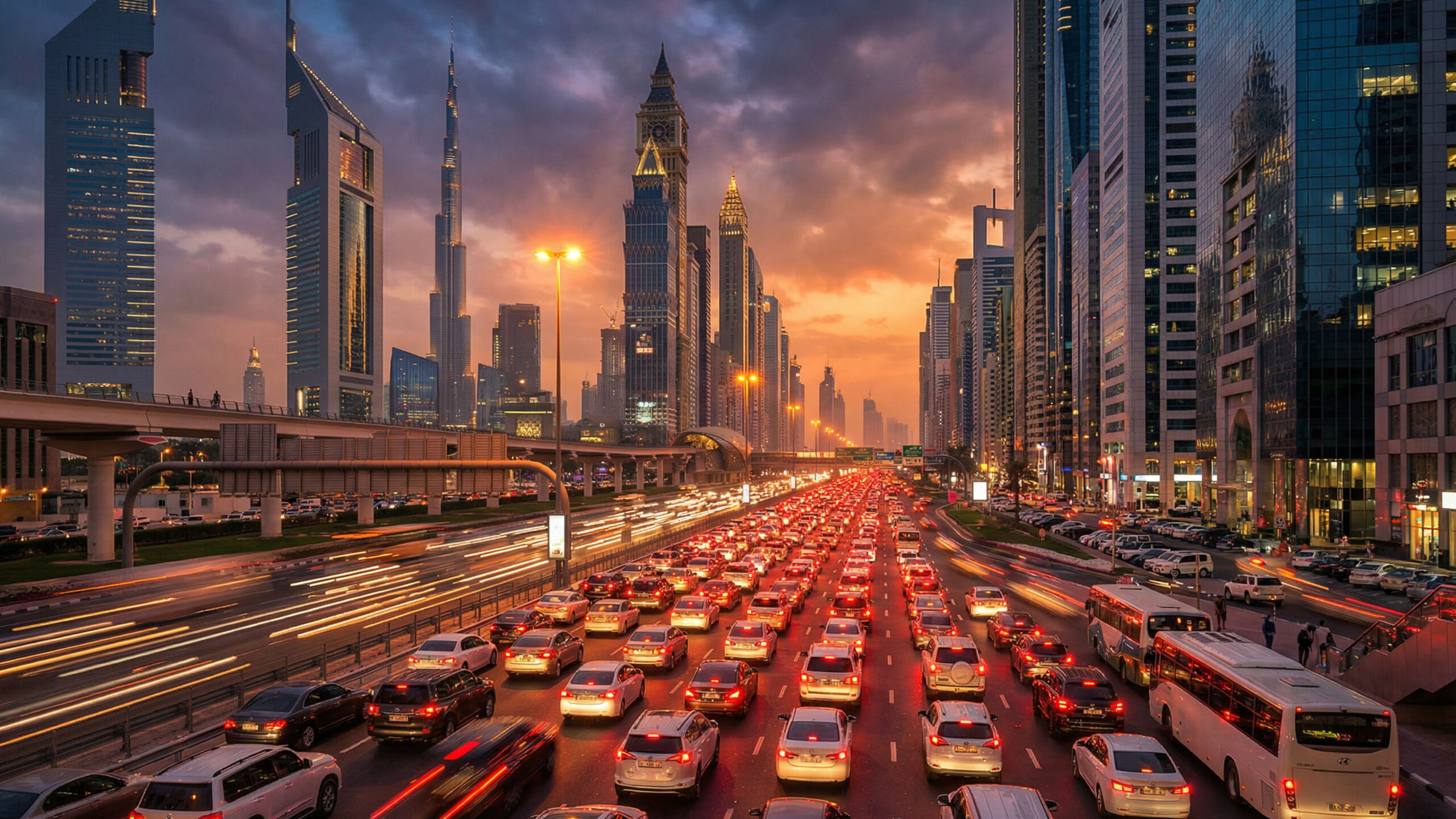
Urban success has a silent trade-off: the hours we lose in traffic.
Across fast-growing cities in the UAE, infrastructure has scaled quickly, but population density has moved even faster. The result is a daily reality many professionals now feel: a commute that once took 20 minutes can easily stretch to nearly an hour.
Dubai’s public transport recorded 802.1 million riders in 2025, up 7.4% from 2024, averaging over 2.2 million daily trips. Rising demand has increased pressure on infrastructure, prompting RTA to expand bus and taxi lanes and improve efficiency.
This shift is reshaping how people choose where to live. Today, location is no longer just about status; it’s about reclaiming time, reducing daily friction, and protecting mental bandwidth.
That’s where developments from Emaar, Aldar, and Sohba are changing the conversation, blending upscale living with strategic connectivity, smarter commuting, and long-term lifestyle value.
How Dubai Public Transportation Is Transforming Daily Commutes
Dubai is rapidly upgrading its transportation infrastructure to reduce traffic congestion and make commuting easier for residents, professionals, and investors. Major projects like the Dubai Metro Blue Line are set to connect key hubs, including Business Bay, Dubai Creek Harbour, Silicon Oasis, and Dubai Marina, which is bringing faster access to business districts and lifestyle destinations.
These infrastructure developments are expected to cut road congestion by nearly 20% while increasing property values by an estimated 20–25% in areas near metro stations. As a result, demand for homes close to metro routes and major highways is rising among both residents and real estate investors in Dubai.
Beyond metro expansion, the city is introducing AI-powered traffic management systems, road upgrades, and mobility solutions aligned with hybrid work trends. These improvements are helping optimize travel times, reduce bottlenecks, and influence where people choose to live and invest.
Communities with strong public transport connectivity, internal road planning, and proximity to commercial hubs are now among the most desirable residential areas in Dubai. Easy access to metro stations, business districts, and arterial roads is becoming a key factor in property buying decisions.
Market Shift: Property Prices in Dubai Are Now Driven by Livability
The idea that Dubai property prices grow mainly due to speculation is fading. Today, value appreciation is increasingly linked to how practical and livable a community is.
Recent market data shows residential prices in Dubai rose by around 8.4% in 2025, with the strongest performance seen in areas offering integrated infrastructure, mixed-use planning, and seamless connectivity. Communities designed around convenience, accessibility, and daily usability are consistently outperforming others.
For investors and homebuyers, this signals a key reality: properties built around lifestyle efficiency tend to maintain stronger long-term value and stability. Proximity to transport, commercial hubs, and essential services is no longer a bonus; it’s a fundamental investment factor.
Time Efficiency Is the New Definition of Luxury
Luxury living in Dubai has evolved. It’s no longer defined only by premium finishes or skyline views; it’s increasingly measured by how much time a location saves in everyday life.
Modern residential developments are being planned around convenience, access, and functionality. Communities designed with nearby retail, offices, schools, and transport links allow residents to move through daily routines with less stress and greater efficiency.
This shift delivers tangible lifestyle benefits:
- Shorter commute times
- Improved work-life balance
- Lower daily transportation costs
- Increased productivity
- Greater long-term residential satisfaction
These factors also directly impact rental demand and resale potential, strengthening the financial performance of well-located properties.
Best Areas to Live in Dubai for a Short Commute
Choosing the right neighborhood in Dubai can significantly reduce daily travel time and improve overall lifestyle quality. Communities with direct access to metro lines, major highways, and business districts are increasingly preferred by residents and property investors looking for convenience and long-term value.
Nad Al Sheba – Well-Connected and Low-Traffic Living
Nad Al Sheba is ideal for residents seeking faster, less stressful commutes. Its proximity to Al Ain Road, Emirates Road, and E44 allows smooth travel to major commercial areas across the city. The neighborhood is known for lower congestion compared to central districts, along with modern homes, schools, and lifestyle amenities—making it suitable for both families and working professionals.
Dubai South – Strategic Location Near Future Growth Hubs
Dubai South is gaining popularity for its affordability and connectivity. With direct access to Emirates Road and Expo Road, residents can commute easily to key business zones and aviation hubs. The area is also benefiting from upcoming infrastructure and development projects, making it a strong choice for buyers focused on long-term investment and convenience.
Dubai Hills Estate – Balanced Lifestyle with Strong Connectivity
Dubai Hills Estate offers quick connectivity via Al Khail Road and Umm Suqeim Road, making travel to business districts and lifestyle destinations efficient. The community combines residential comfort with green spaces, retail options, and leisure facilities, making it a preferred choice for professionals and families seeking both accessibility and premium living.
Expo City Dubai – Smart Living with Metro Access
Expo City is emerging as a modern residential hub designed for efficient mobility. With metro connectivity, access to Mohammed bin Zayed Road, and well-planned road networks, residents benefit from reduced travel times and minimal congestion. The area appeals to buyers interested in future-ready communities with strong infrastructure support.
Dubai Creek Harbour – Connected Waterfront Community
Dubai Creek Harbour offers a blend of scenic living and improved connectivity. Upcoming metro developments and access to major roads such as Ras Al Khor Road make commuting to Downtown Dubai and nearby districts faster. Its waterfront setting, parks, and residential projects also make it attractive for investors seeking growth potential.
Business Bay – Central Living for Faster City Access
Business Bay remains one of the most strategically located areas in Dubai. With direct metro access, extensive road networks, and proximity to Downtown Dubai, residents can reach workplaces and lifestyle destinations quickly. Despite peak-hour traffic, its central positioning makes it one of the most time-efficient locations for urban living.
Public Transport Options in Dubai: Metro, Buses, Tram & Marine Services
Dubai has developed one of the most modern public transportation systems in the Middle East, designed to make daily commuting more efficient and affordable. While the city still relies heavily on road travel, its expanding network of metro lines, buses, tram routes, and marine transport continues to improve accessibility across major residential and business areas.
Dubai Metro – Fastest Way to Commute in Dubai
The Dubai Metro is the city’s most reliable option for avoiding traffic congestion. With two main lines covering around 89.6 km and 55 stations, it connects key corridors such as Sheikh Zayed Road, Downtown Dubai, Business Bay, and Dubai Marina. Fares start from AED 3 and vary by travel zones, making it both cost-effective and time-saving for daily commuters.
Dubai Tram – Convenient for Coastal Communities
The Dubai Tram operates across 11 stations, linking Dubai Marina, Al Sufouh, and the Palm Monorail. It’s ideal for short-distance travel within leisure and residential areas. While efficient and affordable, its coverage is limited to a single coastal stretch.
RTA Buses – Extensive Citywide Coverage
Dubai’s RTA bus network includes over 1,300 buses operating on nearly 187 routes, covering most urban districts and transporting hundreds of thousands of passengers daily. Feeder buses improve metro access, though travel times can be longer in high-traffic areas without dedicated bus lanes.
Marine Transport – Alternative & Scenic Routes
Dubai’s water transport system includes abras, ferries, and water buses connecting Dubai Creek and coastal locations. These services offer a unique commuting experience and help reduce road dependency, though routes and frequency remain limited compared to land transport.
Why Developer Reputation Matters More Than Ever
As Dubai’s real estate market matures, developer credibility has become a decisive factor in buyer confidence and investment success. Delivery timelines, construction quality, and project completion reliability now play a major role in purchasing decisions.
Projects backed by experienced developers tend to achieve faster occupancy, stronger absorption rates, and more consistent long-term value. Investors increasingly prioritize developers with a proven track record of execution and strategic planning.
Developments from Emaar, Sohba, Aldar, and Binghatti reflect this new direction, where residential planning focuses on connectivity, functionality, and practical everyday living. By aligning location, pricing, and infrastructure access, such projects are designed not just for immediate appeal but for sustained livability and long-term performance in Dubai’s evolving property landscape.
Final Perspective
Property investment is no longer just about capital appreciation or rental yield. In a fast-moving city like Dubai, the true measure of value lies in everyday efficiency. A home that saves you time, reduces stress, and simplifies movement ultimately delivers returns far beyond numbers on paper.
Smart buyers now prioritize connectivity, access to infrastructure, and community planning as much as design and amenities. Danova Properties reflect this evolution, where location, functionality, and long-term vision come together.
In modern urban living, the best investment isn’t only about where you live. It’s about how seamlessly your life flows.
FAQs:
1. How does choosing the right home reduce daily commute time?
Living near metro stations, major highways, and business districts can significantly cut travel time by avoiding traffic-heavy routes and long-distance commuting.
2. What are the best locations in Dubai for a short commute?
Areas like Business Bay, Dubai Hills Estate, Expo City, Dubai Creek Harbour, and Nad Al Sheba offer strong connectivity to metro lines, main roads, and commercial hubs.
3. Does commute time affect property value in Dubai?
Properties in well-connected areas often see stronger appreciation and rental demand because buyers prioritize accessibility and lifestyle convenience.